
No Collections Here
Sort your projects into collections. Click on "Manage Collections" to get started
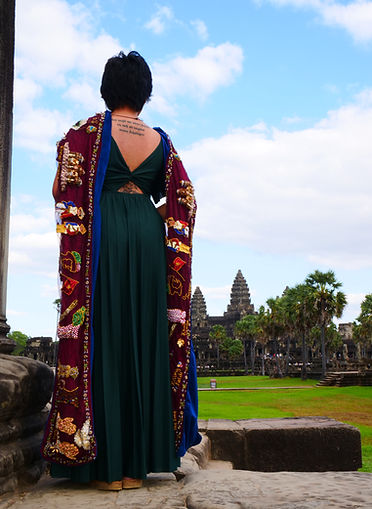
FREEDOM
"The Freedom project is intended to
describe the difficult struggle and the traces
that Cambodia has left in history. "
The goal of freedom has accompanied the country from the beginning of its time to the present day.
The 6 illustrations on the cloth are intended to
represent the historical timeline of Cambodia
-
chronologically
-
symmetrically
-
from top to bottom with a suitable picture
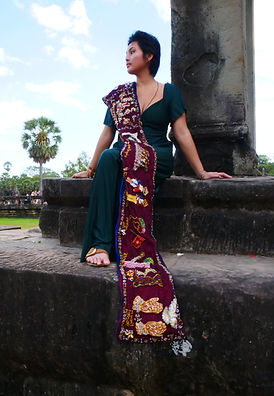
Details: All the patterns, motives and the embroidery
that I have made are designed by myself.
The outline is covered with a beautiful beaded pattern that is
designed by myself. The motifs are embroidered on a
beautiful polyester purple-burgundy tulle with different beads.
I used a transparent thread that is usually used for bracelets. I
decided to do the normal embroidery.
Small golden details, such as the border of the seven
main motifs, are intended to emphasize the
splendour of the temples and Buddhism.
(I ordered most of the beads on Amazon, as well as the
fabrics, the needles and the threads).
Last but not least, I decided to use a beautiful
burgundy and a dark blue fabric, as they should
reflect the colours of the Cambodian flag.
The fabrics were sewn together for me by a seamstress from
my area.
(I thank her very much for doing the last step for me. I wouldn't have
made it without her.)
ThankFul
I am very grateful to have worked on this part of
the project for over 11 months. It has expanded my
knowledge of the history of Cambodia, as well as the skills as
an artist. My therapist said I should indicate how many hours
I sat on it. Overall, it took me 5132 hours. Nevertheless, I am
infinitely happy to have had these experiences, because I
have taken a step forward as an artist. My hope and bond
with God helped me a lot during this time not to gave up.
The project gave me enough time to spend time alone with
myself and my thoughts.
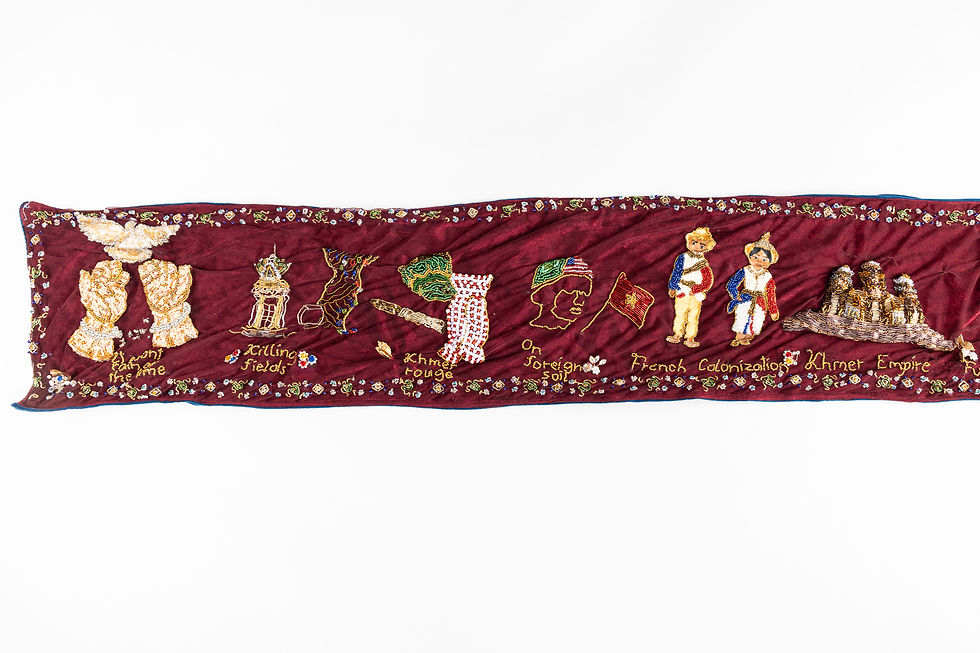
6.. Killing fields- It shows the "Killing tree".
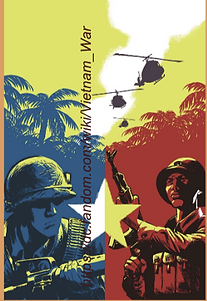
4. On foreign soil- Imageof a U.S soldier and theVietnam flag. It reflects theVietnam war between USA and Vietnam. Around 26million bomblets have fallen on Cambodia.
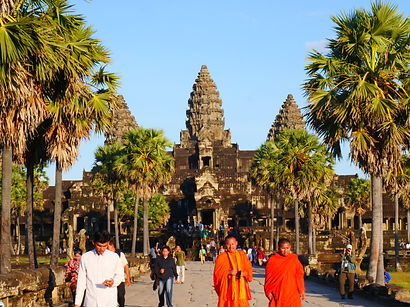
2. Khmer Empire- It
illustrates Angkor Wat.
7. It won ́t rain all the time-
It represents two hands
that free themselves from
handcuffs and release a
dove. The dove stands for
freedom.
5. Khmer rouge- It shows the well-
known clothing: a brown-green-okka
coloured cap and a red scarf, which
all Cambodians had to wear during
the occupation of the Khmer Rouge.
The weapon symbolizes the violence
that children had to deal with at an
early age.
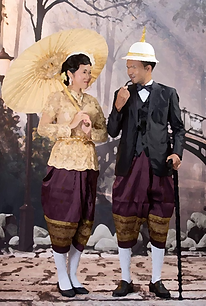
3. French Colonization - It
shows a Cambodian couple
wearing typical traditional
clothes during the French
colonial period.
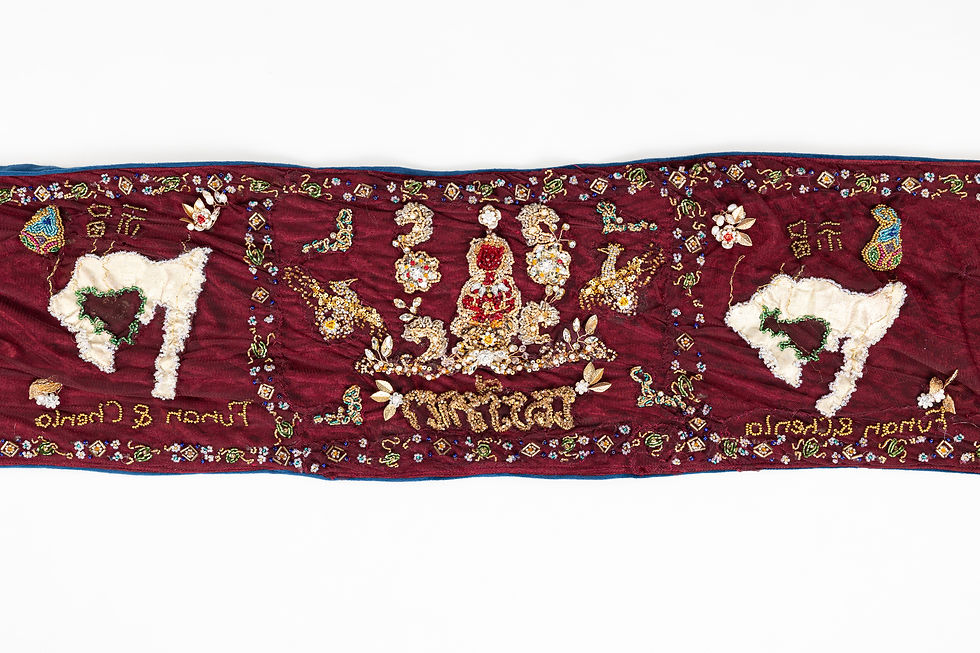
1. Funan Chenla
– It shows the
former kingdom of Funan and
Chenla and typical Chinese-Indian patterns.
The main motif is decorated with typical
Cambodian patterns. The 2 birds stand for
freedom. In the middle is a Buddha that is shown
on the walls of many temples. In the middle, the
word FREEDOM is written in Khmer.
1. Funan Chenla
– It shows the
former kingdom of Funan and
Chenla and typical Chinese-Indian patterns.
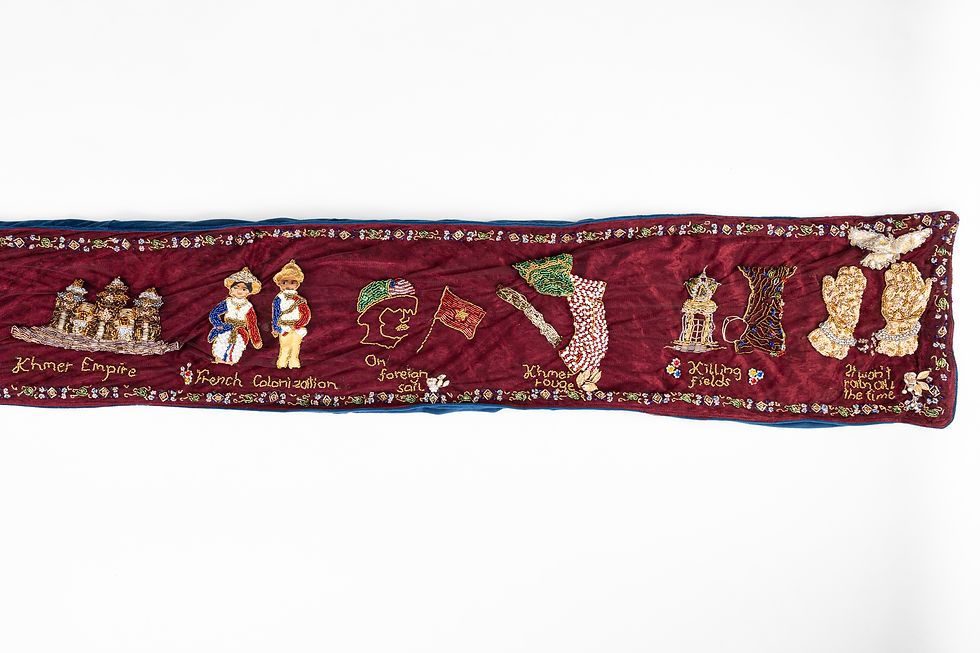
2. Khmer Empire- It illustrates Angkor Wat.
4. On foreign soil- Imageof a U.S soldier and theVietnam flag. It reflects theVietnam war between USA and Vietnam. Around 26million bomblets have fallen on Cambodia.
6.. Killing fields- It shows the "Killing tree".
3. French Colonization - It
shows a Cambodian couple
wearing typical traditional
clothes during the French
colonial period.
5. Khmer rouge- It shows the well-
known clothing: a brown-green-okka
coloured cap and a red scarf, which
all Cambodians had to wear during
the occupation of the Khmer Rouge.
The weapon symbolizes the violence
that children had to deal with at an
early age.
7. It won ́t rain all the time-
It represents two hands
that free themselves from
handcuffs and release a
dove. The dove stands for
freedom.
History
Funan & Chenla
Funan, an ancient state in Cambodia that emerged in the 1st century and was
incorporated into the state of Chenla in the 6th century. Funan was the first major Hindu
kingdom in Southeast Asia. It included parts of present-day Vietnam, Thailand and
Cambodia. Archaeological finds show that Funan was clearly influenced by Indian
cultures, such as Roman coins, Indian jewellery, and Buddhist religious objects. The
development of new trade routes between China and India in the first century
favoured the appearance of settlers in the region, and according to Chinese records,
one of the first settlements belonged to Funan.
The Funan Kingdom was heavily influenced by Indian culture and had adopted many
elements of Indian tradition, such as the use of the Sanskrit language in the high courts,
the Buddhist and Hindu religions, astronomy, the legal system, and literature. However,
in the 6th century , the stability of Funan was threatened by civil wars, and the
kingdom of Chenla gained control of Funan, which ushered in a new phase of
Cambodian history.
The Chenla incorporated the kingdom and adopted its population and culture. The
Chenla Kingdom was a Khmer civilization that is considered the predecessor of the
Khmer Empire in Angkor. The Chenla State originated around 550 ,upper Chenla,
which included the southern part of Laos and the northern areas along the Tonle Sap,
and Lower Chenla, which consisted of the eastern areas of Tonle Sap and the coastal
areas.

Photographer: Daniel Antalfi 2026

Khmer Empire
Angkor Wat, the temple complex in Angkor, near Siem Reap, Cambodia, was built in the 12th century by King Suryavarman II (reigned 1113–c. 1150) of the Khmer Empire.
The sprawling religious complex of Angkor Wat includes more than a thousand buildings and is one of the world & great cultural wonders. The Angkor civilization marked the golden age of Cambodian history.
It was characterized by its architectural and cultural superiority, its territorial extension and its wealth.
The age began in 802 cenrury and lasted until the 15th century. The capital of the Khmer Empire, Angkor was the largest urban settlement in history before the Industrial Revolution, and was home to up to one million residents. This was possible thanks to complex systems of infrastructure, irrigation and agriculture. Angkor Wat is the largest religious complex in the world, covering about 160 hectares and marking the pinnacle of Khmer architecture. Angkor Wat (near Siem Reap) is Cambodia most famous temple and is a UNESCO World Heritage Site. The city of Angkor served as a royal centre, of which a dynasty of Khmer kings became one of the largest, most prosperous and culturally sophisticated kingdoms.
Today, Angkor Wat is one of the most important pilgrimage sites in Southeast Asia and a popular tourist attraction. The temple complex appears on the flag of Cambodia.
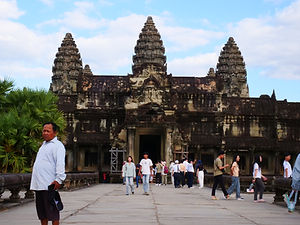
Images: Angkor Wat 2025
Photographer: Sou Eat
French colonization
The colonial period in Cambodias history covers a significant period from the end of the 19th century to the middle of the 20th century. This period had a profound impact on Cambodias political, economic and cultural development. French colonization led to both a modernization of the country and significant social changes that had a long-term impact on Cambodian society and culture. The main goal of the colonizers was the economic exploitation and use of the countrys natural resources. Cambodia was
incorporated into the colonial economy of French Indochina, which also included Vietnam, Laos, and Cambodia. France controlled production and trade and made significant profits from it, while the local population remained poor. The measures taken by the colonial authorities often restricted the rights of farmers and workers, leading to discontent and social protests. French influence also had an impact on Cambodias education and social structure. As a result of these changes, a new intellectual emerged who recognized the need for political and social change. Some members of this group became active participants in anti-colonial movements, which led to the formation of a national consciousness and the
aspiration for independence. French culture has had a significant influence on art, architecture, and literature. French architects and urban planners developed new urban plans for Phnom Penh, which led to the construction of modern colonial-style buildings, such as administrative buildings and theatres. However, this also led to a conflict between traditional Khmer culture and Western influences.
In 1953, Cambodia finally gained independence from France under pressure from the local population and the international public. The struggle for independence was long and complicated, leaving profound traces in the countrys social consciousness and political landscape
On foreign soil
The history of the genocide of more than 1.7 million Cambodians dates back to the Vietnam War. Cambodia became an important retreat for the Vietnamese Underground Army (FLN) in the 1960s.
Therefore, the east of Cambodia was systematically bombed on the orders of US President Richard Nixon from 1969 onwards. Studies reported how old U.S. bombs hindered Cambodias development. The United States dropped hundreds of thousands of bombs on Cambodia during the 1960s and 70s. Explosive devices that fell on fertile land exploded less often than those that hit barren land. The unexploded ordnance increased poverty in these areas.
"I want everything that can fly to be taken to Cambodia, and every open target bombed.´´
This demand, addressed by US President Richard Nixon to his National Security Adviser Henry Kissinger on December 9, 1970 indicates the brutality that the United States was prepared to use in the fight against the Viet Cong. These guerrillas were fighting in South Vietnam against a US-backed anti communist government. Cambodia served as a retreat for them.They did not care about international law. The air strikes in Cambodia often hit densely populated areas, along the Mekong River also rice fields and villages. Tens of thousands of people died. But the long-term consequences of the air war are much more far-reaching. Cluster bombs were often used in the American carpet bombings between 1969 and 1973. These bombs serve as containers for many small bombs, so-called bomblets.
Around 26 million bomblets have fallen on Cambodia – about a quarter of them are said not to
have exploded and are said to have been left behind as unexploded ordnance.
To this day, parts of the country are contaminated.
Khmer Rouge
Shortly after the end of the American air war, the Khmer Rouge terror regime came to power, against which the US had also flown combat missions. The Communists killed about 1.7 million Cambodians.
Hardly any historian today disputes that the US bombings made the Khmer Rouge dictatorship possible in the first place. The orphans left behind by the attacks became the regimes most brutal cadres .
The political events of the last five years had prepared the ground for the victory of the Khmer Rouge in 1975: the excessive corruption and incompetence of the government of Lon Nol. The intermittent U.S. bombing of Cambodia in 1969-73 cost the lives of about 150,000 farmers. The American and South Vietnamese invasions of southeastern Cambodia (which drove North Vietnamese troops deeper into the country) and the support that Sihanouk showed to the Khmer Rouge led many Cambodians to believe that they would be better off under the party led by Pol Pot. They pursued an indigenous communism based on the agrarian Chinese Cultural Revolution, supported by strong nationalist sentiments. Cambodian communism was embedded in strong anti- Vietnamese sentiments.
In 1975, after a long civil war against Lon Nols army, the Khmer Rouge marched into Phnom Penh and were greeted by exuberant crowds who believed that the end of war and hardship was finally over. The new regime (Democratic Kampuchea) is one of the most brutal in Cambodias history.
The next day, the Khmer Rouge began evacuating all cities and relocating all citizens to the countryside. Cambodia was reinvented into a radical agrarian utopia All foreign influences, capitalism, Western culture, religion and modern life have been abolished. Embassies were closed, foreigners expelled, newspapers, radio and television stations closed, health and education systems abolished, mone and markets banned. The children were taken out of the parental guard and put in communal camps. Cambodia has been taken back to Year Zero.
Cambodian communism was marked by strong anti- Vietnamese sentiments. Money and markets were forbidden. The Khmer Rouge killed an estimated 2 million Cambodians over a four-year period. Deadly purges were carried out to society. In the beginning, they were aimed at the elements of the teachers, intellectuals, doctors, lawyers, wealthy people, Buddhist monks, police officers, former government officials and the educated.
Towards the end of 1967/68, the party became obsessed with the idea that enemies could penetrate the ranks of the party, which led to bloody purges being carried out against the party cadres. Malnutrition and disease caused a large number of deaths. In the regions, unrealistic quotas were given for rice that had to be sent to Phnom Penh, and in most cases, people were left without food. Hunger and lack of medical care (there were noeducated people and no medicines) proved deadly.
In 1977, the country could no longer sustain itself due to the high mortality rate.However, the regimes megalomania led Vietnamese villages to raid them in an attemptto gain control of the Mekong Delta. The poorly equipped Khmer forces were no match for the Vietnamese forces, and the results were catastrophic. Pol Pot responded with further purges within his party members, and some of them fled to Vietnam.
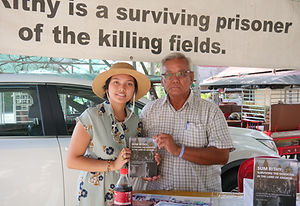
Images: Killing fields & Tuol Sleng prison
Photographer: Sou Eat
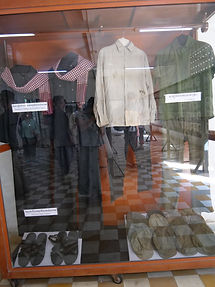
Killing fields
Khmer Rouge regime was notorious for its brutality,
especially on the killing fields of Phnom Penh.
Thousands of people were brutally murdered here, often
using methods such as truncheoning or shooting. They
were buried in mass graves. The Khmer Rouge also
forced people to do forced labour, including the
construction of the infamous prison where thousands of
prisoners were tortured and killed.
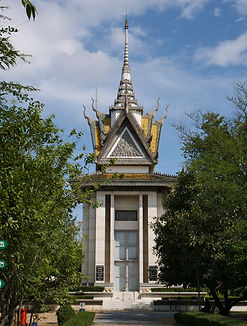
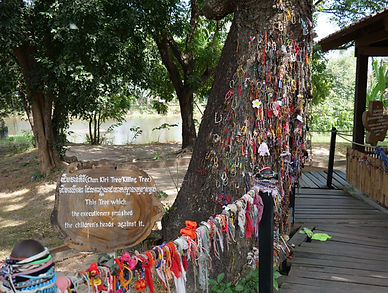
Images: Killing fields 2025
Photographer: Sou Eat
It won’t rain all the time
Even though the UN-backed tribunal to come to terms with the genocide ended in December 2022, the consequences of the Khmer Rouge terror regime are still felt today: the population still suffers from traumatisation, land grabbing, a weak judicial system and corruption.
The trauma still runs deep in the families today. The Khmer Rouge are still active underground, but they do not currently pose an acute threat. The memory of their crimes is to be kept alive – for example, a law was passed on February 18, 2025, making genocide denial a punishable offence.
However, in the past, such decrees were often used to discredit political opponents.
According to a study by the Transcultural Psychosocial Organization, around 20% of the cambodian population suffer from „post-traumatic stress disorder.
In addition to the past that has not been dealt with, the unsatisfactory socio-economic reality is also a burden for the population. An independent and efficient judiciary is indispensable for the further pacification and development of Cambodia. Under the Khmer Rouge, most of the documents on private property and the cadastral system were destroyed. As a result, many people are affected by land grabbing and forced evictions, often in favour of large development projects. One in five households no longer has their own land.
Today
Cambodia has been shaped by the negative events of modern Cambodian history. In recent years, reconstruction efforts have evolved, and Cambodia is now a multi-party liberal democracy within the framework of a constitutional monarchy, according to the countrys constitution. Prince Norodom Sihamoni is the king and the current prime minister is Hun Sen, a member of the Cambodian People Party, who has held this office since 1998. Modern Cambodia has remained relatively stable under the CPV government, and the country is making efforts to modernize its economy, which is still heavily dependent on agriculture, with the support of financial aid from the international community, foreign investment, and rising tourism numbers. The process is slow, and Cambodia is still far behind its neighbour countries in healthcare, economic infrastructure, and education.
Nevertheless, the future looks brighter with the advance of political stability and the end of fighting between different factions.
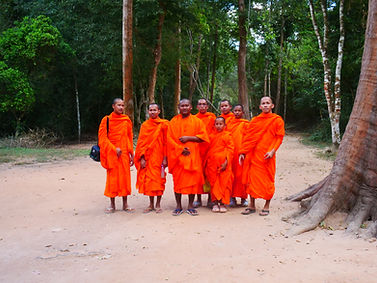
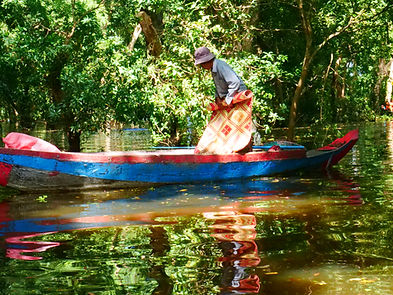
Images: Ta Phrom & Floating villages 2024/2025
Photographer: Sou Eat
My personal wish
Many people are not able to talk about their trauma yet and want to leave the traumatic past behind them. It is important that the world learns about the horrific acts that the country, especially these people had to experience.
The locals also have the right to know what happened to their parents and grandparents. Learning from your countries past history gives you knowledge and enlightenment is power.
I hope that the wounds that the country and its people are carrying will one day be allowed to heal.
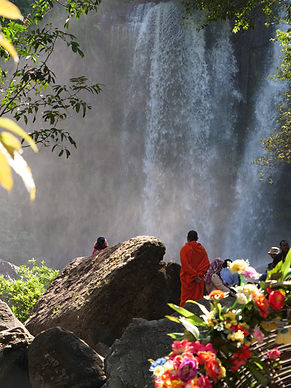
Images: Kulen Waterfalls 2025
Photographer: Sou Eat